About Me

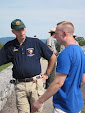
My photo
I am a lifelong student of military history with particular interest in the Battle of Antietam. I work for the federal government in Washington DC and have two young adult children who I love very much. I currently volunteer at Antietam and devote much time to the study of this battle and the Maryland Campaign. I enjoy collecting notable contemporary quotations by and about the men of Antietam. Since 2013 I have been conducting in depth research on the regular artillery companies of the Union Army and their leaders. I hope to turn this into a book on this subject in the future. My perspective comes from a 28-year career in the U.S. Army. Travels took me to World War II battlefields in Europe and the Pacific where American valor ended the tyranny of Nazism and Empire. But our country faced its own greatest challenge 80 years earlier during the Civil War. And it was the critical late summer of 1862, when Robert E. Lee launched the Maryland Campaign. It is an incredible story of drama, carnage, bravery, and missed opportunities that culminated around the fields and woodlots of peaceful Sharpsburg MD. So join me as I make this journey South from the North Woods.

Monday, February 6, 2012

West Pointers at Army Headquarters

McClellan and members of his staff
There are a couple of reasons why I have not been posting lately.  One is that I accepted the position of Chief Guide at Antietam National Battlefield back in October.  That has taken up a great deal of my time and though rewarding, has taken me away from my Maryland Campaign studies.

The other reason is that I have become increasingly fascinated with something that I first posted about here back in December.

That is I have undertaken a study of all the West Point graduates who served at the Battle of Antietam.  Studying Cullem's Register and with some help from the library staff at West Point, I have amassed what I think is a pretty complete list of all the graduates.  They range from Joseph Mansfield in the Class of 1822 to the fifteen second lieutenants of the Class of 1862 who served with the Army of the Potomac.  One of these young officers was Mansfield's son Samuel who was on his way to western Maryland to serve with his father.

In between the Mansfields, father and son are about 194 officers.  I say 'about' because there are several who I suspect served in the Maryland Campaign but I don't have absolute confirmation of their presence.  Circumstantial evidence indicates yes but I am still working on them.  And then there is John Pelham and Tom Rosser.  Members of the June 1861 class, they stayed at the Academy long after their states (Alabama and Texas) seceded hoping to receive their diploma.  However with the firing of Fort Sumter, they had no choice to resign doing so just a few short weeks from their graduation.  Pelham later said that not receiving his diploma was the greatest regret of his life. 

Of these 194, only 30 served with Lee in the Army of Northern Virginia.  The remainder, 164 are with McClellan but this number also includes Dixon Miles and Jesse Reno who were killed before the battle, and John Reynolds, unhappily serving back in Pennsylvania.  The Union to Confederate ratio of 5.4:1  really surprised me.  I thought there were many more Confederates than that.  On closer examination however, the ratio is much closer if you just include general officers.  There are a total of 63 generals with 42 Federals and 21 Confederates.  This is exactly a 2:1 ratio which seems closer to what we feel seems right. 

The numbers are very startling when you just look at the Army headquarters which we will do here.  The Army of the Potomac headquarters with 36 West Pointers including McClellan had more West Point officers total than Lee had in his entire Army.  Lee had only four officers who graduated from the Military Academy who can be said to have worked on his staff.  The numbers are below starting with Lee:


Position
Name
Rank
Year of Graduation
Class Rank
Commander
Robert E. Lee
General, CSA
1829
2 of 46
Chief of Staff
Robert H. Chilton
Colonel, C.S.A.
1837
48 of 50
Military Secretary
Armistead Long
Colonel, C.S.A.
1850
17 of 44
Ordnance Officer
Edward P. Alexander
Lieutenant Colonel, C.S.A
1857
3 of 38
Chief of Artillery
William Pendleton
Brigadier General C.S.A.
1830
5 0f 42


And here is McClellan's staff


Position
Name
Rank
Year of Graduation
Class Rank
Commander
George B. McClellan
Major General U.S. Army
1846
2 of 59
Chief of Staff
Randolph Marcy
Brigadier General U.S.V.
1832
28 of 44
Aide-de-Camp
Bowman N. Sweitzer
Lieutenant Colonel-Staff
1853
24 of 52
Aide-de-Camp
Edward M. Hudson
Lieutenant Colonel-Staff
1849
22 of 43
Aide-de-Camp
George A. Custer
Captain-Staff
June 1861
34 of 34
Aide-de-Camp
James P. Martin
First Lieutenant 7th Infantry
1860
23 of 41
Escort
James B. McIntyre
Captain, 4th Cavalry
1853
49 of 52
Chief of Cavalry
Chief of Cavalry
John Buford
Brigadier General U.S.V.
1848
16 of 38
Chief of Artillery
Chief of Artillery
Henry J. Hunt
Brigadier General U.S.V.
1839
19 of 31
Ammunition Reserve Train
William D. Fuller
First Lieutenant 3rd Artillery
June 1861
25 of 34
Regular Engineer Battalion
Chief Engineer
James C. Duane
Captain, Engineers
1848
3 of 38
Engineer Battalion
Cyrus B. Comstock
First Lieutenant Engineers
1855
1 of 34
Engineer Officer
Miles D. McAlester
First Lieutenant Engineers
1856
3 of 49
Engineer Battalion
Charles Cross
First Lieutenant Engineers
May 1861
2 of 45
Engineer Company
George L. Gillespie
Second Lieutenant Engineers
1862
2 of 28
Topographical Engineers
Senior Topographical Engineer
Nicolas Bowen
First Lieutenant, Topographical Engineers
1860
4 of 41
Assistant Topographical Engineer
John M. Wilson
First Lieutenant, Topographical Engineers
1860
12 of 41
Assistant Topographical Engineer
Alonzo H. Cushing
First Lieutenant, 4th Artillery
June 1861
12 of 34


Adjutant General
Adjutant General
Seth Williams
Brigadier General U.S.V.
1842
23 of 56
Assistant Adjutant General
George Ruggles
Colonel-Staff
1855
19 of 34
Assistant Adjutant General
Albert V. Coburn
Lieutenant Colonel-Staff
1855
17 of 34
Assistant Adjutant General
James A. Hardie
Lieutenant Colonel-Staff
1843
11 of 39
Inspector General
Inspector General
Delos B. Sackett
Colonel-Staff
1845
32 of 41
Assistant Inspector General
Nelson Davis
Major-Staff
1846
49 of 59
Provost Guard
Assistant Provost Marshal
William D. Wood
Major, 17th Infantry
1845
37 of 41
Aide de Camp
James J. Van Horn
Captain, 8th Infantry
1858
14 of 27
Provost Guard
George A. Gordon
Captain, 2nd Cavalry
1854
30 of 46
Provost Guard
Royal T. Frank
Captain 8th Infantry
1858
18 of 27


Commissariat
Chief of Commissariat
Henry F. Clarke
Colonel-Staff
1843
12 of 39
Assistant Commissary of Subsistence
Porter A. Parker
Lieutenant Colonel-Staff
1856
9 of 49
Commissary of Subsistence
Thomas Wilson
Captain-Staff
1853
29 of 52
Quartermaster
Chief Quartermaster
Rufus Ingalls
Lieutenant Colonel-Staff
1843
32 of 39
Assistant Quartermaster
Charles G. Sawtelle
Captain-Staff
1854
38 of 46
Quartermaster Guard
Marcus Reno
Captain, 1st Cavalry
1857
20 of 38
Ordnance
Assistant Ordnance Officer
William H. Harris
First Lieutenant, Ordnance
June 1861
8 of 34
Assistant Ordnance Officer
Francis H. Parker
Second Lieutenant, Ordnance
June 1861
20 of 34

Here is the breakout of McClellan's staff by West Point year-group.


Class
Names
1832 (1)
Marcy, R.
1839 (1)
Hunt, H.
1842 (1)
Williams, S.
1843 (3)
Hardie, J. Clarke, H. Ingalls, R.
1845 (2)
Sacket, D. Wood, W.
1846 (2)
McClellan, G. Davis, N.
1848 (2)
Duane, J. Buford, J.
1849 (1)
Hudson, E.
1853 (3)
Sweitzer, N. Wilson, T. McIntyre, J.
1854 (2)
Gordon, G. Sawtelle, C.
1855 (3)
Comstock, C. Colburn, A. Ruggles, G.
1856 (2)
McAlester, M. Porter, A.P.
1857 (1)
Reno, M.
1858 (2)
Van Horn, J.  Frank, R.
1860 (3)
Bowen, N. Wilson, J. Martin, J.
May 1861 (1)
Cross, C.
June 1861 (5)
Harris, W. Cushing, A. Parker, F. Fuller, W. Custer, G.
1862 (1)
Gillespie, G.

What conclusions can we draw from this?

Friday, January 27, 2012

A Scholarship Award in Honor of Dr. Joseph L. Harsh

The following first appeared at a Facebook page for the Civil War History Journal. 

                  The Board of Directors of Save Historic Antietam Foundation Inc. voted at their November meeting to establish a stipend for scholars willing to research selected aspects of the Maryland Campaign of 1862, especially the battle of Antietam or Sharpsburg. The award is named in honor of Dr. Joseph L. Harsh, longtime professor at George Mason University, and author of the prize-winning trilogy on the Maryland Campaign.  Through the generosity of the family and friends of Dr. Joseph L. Harsh, SHAF is able to provide an annual stipend of up to $2,500 for those who apply to undertake project beneficial to understanding various aspects of the campaign and battle.  The stipend will be offered annually and will be awarded based on a decision by a committee composed of representatives of the SHAF Board of Directors, the Harsh family and Antietam National Battlefield.  It is our hope that this funding will allow research on unresolved issues concerning the campaign.  If a scholar does not have a topic in mind suggestions can be provided by SHAF.

Applicants need not be enrolled in any school, but must provide evidence of their ability to perform the research required for completion of the project. Because this award honors a great scholar it is imperative that the completed project reflect the highest standards of scholarship and research.  Topics must be approved by the stipend committee, and the successful applicant will present his/her finished project at a ceremony in conjunction with the annual anniversary commemoration at Antietam National Battlefield and also produce a written summation in a format suitable for publication.  Applications can be made to SHAF no later than February 15, and the award will be announced by March 1.  Research must be completed by September 1.  The guidelines and more details are available at the SHAF website, www.shaf.org

We are delighted to make this stipend available to all students of the Maryland Campaign, and eagerly await the results of this project.

Application Procedures & Timeline
  1. Applicants must submit a brief statement of a project, a research methodology and relevance of the topic to furthering understanding of the Maryland Campaign of 1862.  They will also provide a brief resume’ emphasizing their historical and research credentials. 
  2. In the event that the applicant does not have a topic in mind the SHAF Board of Directors will generate a list of possible topics and make it available for potential applicants. 
  3. Applications should be submitted by mail to SHAF, P.O. Box 550 Sharpsburg, MD 21782 or emailed through our website, SHAF.org.  All applications must be received by February 15, of each year. 
  4. The stipend committee, made up of three members of the SHAF Board, a representative from the Harsh family, and from the Antietam National Battlefield will choose an awardee annually to receive the stipend, and the committee will also oversee the project.  The criteria used to choose an awardee shall be determined by the stipend committee. 
  5. Unsuccessful applicants may re-apply as often as they like. 
  6. Members of the SHAF Board of Directors are prohibited from applying. 

Thursday, December 22, 2011

The Dawn


I had occasion this week to refer back to Mr. Lincoln’s Army, volume one of Bruce Catton’s landmark work on the Army of the Potomac.  I recently talked to one of my colleagues about the writing style of modern Civil War authors.  Much of it is certainly historically accurate but has an element of dryness and structure that makes it difficult to enjoy.  My friend is actually going back to read Shakespeare to improve his own prose style.  Maybe I should do that as well.  It is no wonder that some of the best Civil War history is written by journalists like Bruce Catton and Douglas Southall Freeman.  It was Catton’s work that ignited my interest as a youngster some 45 years ago and I am still drawn to it.  Without ever having to been to Antietam as a twelve year old, I could visualize it thanks to passages like these I offer below.  This post today, is nothing more than an opportunity to go back and enjoy some of the beautiful writing that I dare say many of you read and which drew you into your own study of the Civil War.  All of these passages beautifully evoke the early morning dawn of September 17, 1862 on the fields north of Sharpsburg but the second one is my favorite.

"There was a tension in the atmosphere for the whole army that night.  Survivors wrote long afterward that there seemed to be something mysteriously ominous in the very air-stealthy, muffled tramp of marching men who could not be seen but were sensed dimly as moving shadows in the dark; outbursts of rifle fire up and down the invisible picket lines, with flames lighting the sky now and then when gunners in the advanced batteries opened fire; taut and nervous anxiety of those alert sentinels communicating itself through all the bivouacs, where men tried to sleep away the knowledge that the morrow would bring the biggest battle the army had ever had; a ceaseless, restless sense of movement as if the army stirred blindly in its sleep, with the clop-clop of belated couriers riding down the inky dark lanes heard at intervals, sounding very lonely and far off."

"And while they slept the lazy, rainy breeze drifted through the East Woods and the West Wood and the cornfield, and riffed over the copings of the stone bridge to the south, touching them for the last time before dead men made them famous.  The flags were furled and the bugles stilled, and the hot metal of the guns on the ridges had cooled, and the army was asleep-tenting tonight on the old camp ground, with never a song to cheer because the voices that might sing it were all stilled on this most crowded and most lonely of fields.  And whatever it may be that nerves men to die for a flag or a phrase or a man or an inexpressible dream was drowsing with them, ready to wake with the dawn."

"The morning came in like the beginning of the Last Day, gray and dark and tensely expectant.  Mist lay on the ground, heavy as fog in the hollow places, and the groves and valleys were drenched in immense shadows.  For a brief time there was an ominous hush on the rolling fields, where the rival pickets crouched behind bushes and fence corners, peering watchfully forward under damp hat brims."