About Me

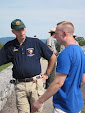
My photo
I am a lifelong student of military history with particular interest in the Battle of Antietam. I work for the federal government in Washington DC and have two young adult children who I love very much. I currently volunteer at Antietam and devote much time to the study of this battle and the Maryland Campaign. I enjoy collecting notable contemporary quotations by and about the men of Antietam. Since 2013 I have been conducting in depth research on the regular artillery companies of the Union Army and their leaders. I hope to turn this into a book on this subject in the future. My perspective comes from a 28-year career in the U.S. Army. Travels took me to World War II battlefields in Europe and the Pacific where American valor ended the tyranny of Nazism and Empire. But our country faced its own greatest challenge 80 years earlier during the Civil War. And it was the critical late summer of 1862, when Robert E. Lee launched the Maryland Campaign. It is an incredible story of drama, carnage, bravery, and missed opportunities that culminated around the fields and woodlots of peaceful Sharpsburg MD. So join me as I make this journey South from the North Woods.

Tuesday, March 20, 2012

The Perfect Lion


Major John Pelham C.S.A.
Jerry H. Maxwell’s new book The Perfect Lion is the latest and most complete biography on the life of Confederate artillerist John Pelham.  The book is a well crafted and detailed account of the life of one of the South’s premier gunners - the Gallant Pelham. 

What was most fascinating to me was the struggle that Pelham endured to remain at West Point in the last few months of his senior year in early 1861.  When the nation fell apart and all of his southern colleagues went home as their state’s seceded, Pelham and best friend Tom Rosser gamely hung on to the admiration of their classmates long after their home states of Alabama and Texas respectively left the Union.  It was only the firing on Fort Sumter that made further tarrying at the Academy impossible.  Pelham and his closest friend Rosser’s adventurous journey through the now fully aroused Northern states to the borders of still neutral Kentucky is well covered.

The book fully treats all the battles that Pelham was engaged in from First Manassas to Kelly’s Ford where the 24 year old was mortally wounded. Pelham’s insanely brave exploits are very well told and it is no wonder that he earned the admiration of Stuart, Jackson and Robert E. Lee.  Yet this remarkably brave and talented gunner was one of the most modest and self-effacing of men and his men loved him for it.  Pelham’s relationship with J.E.B. Stuart is fully explored and the book while not focused on Stuart provides interesting insights into his personality and relationships (some not so warm) with his colleagues in the Confederate cavalry.  One would almost believe that the war was nothing but courting, singing, and strolls in between the fierce fighting.  We also are introduced to Pelham’s subordinate officers in the Stuart Horse Artillery.  Pelham’s last battle at Kelly's Ford on March 17, 1863 is thoroughly covered and this account answered a number of questions that I had about Pelham’s final hours.

The work is well researched with over 68 pages of notes and bibliography, eight photos, and eight battle maps.  However,  I was somewhat distracted by the author’s use of the word “army” to describe all levels of fighting formations.  As one example, he cites Stuart's restless prowls around Nicodemus Heights [and he] must have observed Hooker's army lurking closely in the darkness.  Also as a volunteer and guide at Antietam National Battlefield I know that despite what the book says,  D.H. Hill was not in command of the entire Confederate line at South Mountain.  Rebel elements at the southernmost gap at Burkittsville were lead by cavalryman Thomas Munford, not Hill.  By this account, it would also seem that Pelham's guns alone stopped the Federal attack at Fox Gap when in truth eventually much of D.H. Hills division and parts of Longstreet's wing were also drawn to the struggle and contributed greatly there.  

These observations are truly minor.  I enjoyed the book very much and in its entirety, The Perfect Lion is an important addition to the scholarship of perhaps Lee’s most able artillerist. I highly recommend it. 

Sunday, March 18, 2012

New Trail Under Construction

The unfinished trail looking east. Branch Ave in the distance
Have you ever wished that you could easily hike from the Final Attack Trail or Branch Avenue all the way up the Hawkins Zouave Monument?  In a matter of months you will be able to.  Since last fall, the Park Service has been working on a spur of the Final Attack trail that will connect the Hawkins Zouave Monument path to Branch Avenue.  This past weekend, SHAF’s workday focused on continued improvement of this emerging trail.  About a dozen volunteers and rangers dug stumps, cleared brush, and moved rocks to further carve out this trail.  The two maps posted here show where the trail is going through.  It is along the northern boundary of parkland on the west side of Branch Avenue.  It will emerge somewhere on Branch Avenue near the 23rd Ohio Monument.  Here are several pictures along the new trail looking eastward toward Branch Avenue.

New Trail
SHAF Volunteers
Copes 4:20 PM
While the little plot of land on the park map is known as the Hawkins’ Zouaves monument, it also houses a monument to the Eighth Connecticut along with Isaac Rodman’s mortuary cannon.

On the 4:20 pm Carmen-Copes map Fairchild’s brigade (which had the highest casualty rate of any Federal brigade that day) is battling with elements of Drayton and Kemper’s brigades.  Coming up on their left is the Eighth Connecticut. Fairchild’s brigade is within yards of the town of Sharpsburg.  The battle hangs in the balance. 

Antietam National Battlefield has been working hard to add to the trail system around the park.  Last year the Tidball Trail was created to afford views of the artillery positions manned by units of the Federal Horse Artillery. This year you will soon have the opportunity to traverse this new trail over hotly contested ground on the southern part of the battlefield. The trail is not ready yet but it should be ready for the 150th Anniversary commemorations later this year. Look for a Park Service announcement soon.  

Thursday, March 8, 2012

Quote of the day has moved

Over the past three years of this blog's existence, my quote of the day feature has gone through several evolutions.  Since Antietam Voices is my forum for articulating the words of people who experience the Maryland Campaign, I have decided to move that column over to that blog and endeavor to actually place a new quote there every day.  Unlike SFTNWs, the post will be permanent and not disappear after I update it.  So journey over to Antietam Voices and take a look at the quote for today

Monday, February 13, 2012

Like Us - Follow Us

I have not explicitly mentioned this bit of news here but last fall I assumed the leadership of Antietam's Battlefield Guides.  It has given me a great opportunity to work with a terrific bunch of guys.  Our parent organization, Western Maryland Interpretive Association, and the National Park Service truly support this program.  We now have a Facebook page and our own Antietam Battlefield Guide website.  Consider taking a look at both and if you are so inclined, give us a "like" on Facebook and follow our webpage.  See you at the park. 

Sunday, February 12, 2012

Snow Flying

It has not been much of a winter here in western Maryland.  For many that is a good thing but a boy from Buffalo likes to see the snow fly.  When the forecast yesterday called for a little snow, I grabbed my camera and headed for Antietam.  It is fairly frequent to get pictures when the snow is on the ground but I was lucky yesterday to be there when it was coming down.  I also saw fellow Antietam blogger Dave Maher on the field.  Dave is a great photographer and we will hopefully see some of his shots posted soon. I took nearly 100 pictures before I ran out of battery and flying snow.  Here are twelve that really stood out.  You can see all the pictures at the Antietam Battlefield Guides Facebook page here.  Not a lot of talk this Sunday morning, just a dozen good pictures.
At the National Cemetery
The Joseph Poffenberger House

The 12th Pennsylvania Cavalry from Mansfield Monument

The East Woods and new tree plantings

128th and 137th Pennsylvania Monuments

The southern fence of the Cornfield

A pale winter sun

Battery B, 4th US Artillery with Nicodemus Heights behind

Dunker Church and Maryland Monument from the Mumma farm lane

Tompkins Battery

132nd Pennsylvania Monument at the Sunken Road

Richardson Avenue looking south

Otto and Sherrick farm houses

Looking east from the Final Attack auto stop

Thursday, February 9, 2012

Randolph Marcy’s West Point Years


Randolph Marcy - USMA 1832
Note: This is another in a series of posts that will explore the relationships of the West Pointers who fought at the Battle of Antietam.

Before son-in-law George McClellan named him as his Chief of Staff, Randolph Marcy had already served a long distinguished career as an army officer and established himself as an explorer of some renown.

Randolph Barnes Marcy was born at Greenwich Massachusetts on April 9, 1812.  At the age of 16 years, 3 months he reported to the United States Military Academy on July 1, 1828 and there joined 68 other young men in what would eventually become the Class of 1832. 

Marcy was the only member of his class who fought at the Battle of Antietam. However, Erasmus Keyes who graduated number ten in the class served as an instructor at West Point for many years and as a long time military assistant to Winfield Scott. Keyes commanded the Fourth Corps of the Army of the Potomac during the first year of the Civil War. One division of the Fourth Corps under Darius Couch participated in the Maryland Campaign but Keyes remained at Fort Monroe with the balance of the corps when the Army of the Potomac withdrew to Washington.

James Barnes USMA 1829
As a fourth classman, Marcy was acquainted with a number of upper classmen who he would either serve with at Antietam or face in battle there.  Foremost was Robert E. Lee who graduated in 1829 at the end of Marcy’s first year at the academy.  Also in that class was James Barnes who like Marcy hailed from Massachusetts.   Barnes who ranked only three below Lee was held over at the Academy during Marcy’s second year as assistant teacher of French.  His regular army career in the 4th Artillery was brief and he resigned in 1836 after being stationed at Charleston South Carolina during the Nullification Crisis.  Barnes returned to the army 25 years later as colonel of the 18th Massachusetts Infantry and at the time of the Battle of Antietam commanded the first brigade of George Morell’s division.  One year behind Lee and Barnes were William Pendleton from Virginia and Robert Buchanan from Maryland.  Like Barnes, Pendleton’s regular army career was rather brief.  The future commander of Lee’s artillery reserve was commissioned in the 2nd Artillery in 1830. Pendleton returned to West Point during Marcy’s last year to teach mathematics and then resigned from the army in 1833 to pursue a life in the Episcopal clergy. Robert Buchanan on the other hand was a hard-bitten lifer.  He was commissioned in the 4th Infantry.  Winning two brevet promotions for gallantry in Mexico, he would serve in the same regiment for 30 years rising to the rank of lieutenant colonel on September 9, 1861.  Buchanan like Barnes commanded a brigade in the Fifth Corps.   He served in Sykes “Regular” division commanding the first brigade. Just a year ahead of Marcy was Andrew A. Humphreys of Pennsylvania. Commissioned in the 2nd Artillery, he resigned in 1836 but reentered the Army in 1838 as a topographical engineer.  Humphrey’s entire antebellum career was in that branch. There he rose to the rank of colonel and chief topographical engineer of the Army of the Potomac.   Later commissioned a brigadier general U.S. Volunteers, Humphrey received command of new division of troops on September 12, 1862 who were hastened to western Maryland to become the third division of the Fifth Corps.

Chart 1 – Randolph Marcy’s classmates in the Maryland Campaign
NAME
YEAR
RANK
STATE
COMMISSION
ANTIETAM ASSIGNMENT
Robert E. Lee
1829
2 of 46 
VA
Corps of Engineers
Commander, Army of Northern Virginia
James Barnes
1829
5 of 46 
MA
4th Artillery
1st Brigade, 1st Division, Fifth Corps
William Pendleton
1830
5 of 42 
VA
2nd Artillery
Artillery Reserve. Army of Northern Virginia
Robert Buchanan
1830
31 of 42
MD
4th Infantry
1st Brigade, 2nd Division, Fifth Corps
Andrew Humphreys
1831
13 of 33
PA
2nd Artillery *
3rd Division, Fifth Corps
RANDOLPH MARCY
1832
29 of 45
MA
5th Infantry
Chief of Staff, Army of the Potomac
Rufus King
1833
4 of 43
NY
Corps of Engineers
1st Division, First Corps (till placed on sick leave)
George Morell
1835
1 of 56
NY
Corps of Engineers
1st Division, Fifth Corps
George G. Meade
1835
22 of 56
PA
3rd Artillery *
Pennsylvania Reserve Division, First Corps
Marsena R. Patrick
1835
48 of 56
NY
2nd Infantry
3rd Brigade, 1st Division, First Corps
* Both Meade and Humphreys resigned and later reentered the Army as topographical engineers

Four other future Antietam officers arrived at West Point in the three years after Marcy became a cadet. Rufus King from New York reported to West Point one year later.   King ranked high enough to obtain a coveted commission in the Corps of Engineers.  Serving just three years, King moved to Wisconsin and became a brigadier general U.S. Volunteers on May 17 1861.  As a division commander under Irvin McDowell, King saw action at Groveton and accompanied the Army of the Potomac into Maryland. There he succumbed to epilepsy and was placed on the sick list.  King’s division was commanded by John Hatch at South Mountain, and by Abner Doubleday at Antietam. 

George Morell USMA 35
In his last year at West Point, Marcy met three new fourth year men.  Joining the ranks in the summer of 1831 were George Morell, George Meade, and Marsena R. Patrick.  Members of the Class of 1835, only Meade would pursue a military career.  Commissioned initially in the 3rd Artillery he, like Humphreys resigned in 1836 and reentered the Army in 1842 as a topographical engineer.   Serving in the Mexican War, Meade would receive a brevet for gallantry at Monterry.  Morrell, who ranked number one in the Class of 1835 would also be commissioned in the engineers but would resign in 1837.  Patrick would stick it out in the 2nd Infantry for 15 years earning a brevet in Mexico before resigning in 1850 to pursue agricultural interests.  Morell would command a Fifth Corps division under Fitz-John Porter.  At Antietam Meade and Patrick fought in the First Corps.  Meade commanded the vaunted Pennsylvania Reserve Division and Patrick commanded a brigade of New Yorkers in the division that originally belonged to Rufus King. 

With respect to academics and conduct, Marcy was in the lower half of his class in both accounts. As a 4th year cadet, he started near the bottom.  His second year at West Point appears to be his best.  He put forth a prodigious effort and worked his way up 20 ranks. His total demerits that year were a respectable total of 14.  But after that, his academic performance improved only marginally as the number of demerits increased significantly.  Marcy ended up 28 of 44 academically but 147 of 211 in the order of merit.

Chart 2 - Academic Performance and Conduct - Randolph Marcy

Fourth Year
1829
Third Year 1830
Second Year
1831
First Year
1832
Academic Ranking *
53 of 69
33 of 59
31 of 52
28 of 44
Demerits
76
14
69
104
Order of Merit *
118 of 209
27 of 215
103 of 219
147 of 211
Note:  Academic ranking is within the class.  Order of merit is within the entire corps of cadets
Source:  Register of Officers and Cadets U.S. Military Academy 1829, 1830, 1831, 1832.


In pursuing the relationship of the men who fought at Antietam, their time and memories together at West Point forged relationships that ran to the end of their lives. It is no wonder that men like Marcy Meade, Morell, and Humphreys were comfortable in each other’s company. It is interesting how many of Marcy’s acquaintances at West Point were destined for the Fifth Corps.  Men like Morell, and Humphrey as division commanders and Barnes and Buchanan at brigade level were at the top level of Fitz-John Porter’s corps. 

And as they gathered to fight at Antietam, Marcy and his West Point comrades would face two more of their own just east of Sharpsburg.