About Me

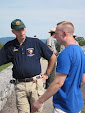
My photo
I am a lifelong student of military history with particular interest in the Battle of Antietam. I work for the federal government in Washington DC and have two young adult children who I love very much. I currently volunteer at Antietam and devote much time to the study of this battle and the Maryland Campaign. I enjoy collecting notable contemporary quotations by and about the men of Antietam. Since 2013 I have been conducting in depth research on the regular artillery companies of the Union Army and their leaders. I hope to turn this into a book on this subject in the future. My perspective comes from a 28-year career in the U.S. Army. Travels took me to World War II battlefields in Europe and the Pacific where American valor ended the tyranny of Nazism and Empire. But our country faced its own greatest challenge 80 years earlier during the Civil War. And it was the critical late summer of 1862, when Robert E. Lee launched the Maryland Campaign. It is an incredible story of drama, carnage, bravery, and missed opportunities that culminated around the fields and woodlots of peaceful Sharpsburg MD. So join me as I make this journey South from the North Woods.

Sunday, July 28, 2013

Where were all the Captains?

-->
Robertson's Battery of Horse Artillery (B&L 2nd Artillery)
During the Maryland Campaign twenty-two of the Union Army’s artillery batteries came from the Regular Army.  Five of these were actually consolidations of two batteries.  Battery consolidations occurred because of the difficulty in recruiting up to authorized strength. Even when consolidated, the batteries submitted separate battery muster rolls each month. That means that there are actually twenty-seven artillery batteries muster reports to look at when studying the regular batteries at Antietam.

These batteries were the core of the Army of the Potomac’s artillery power and were found in every infantry corps, the cavalry division, and the artillery reserve.  As originally envisioned by William Barry and Henry Hunt, the army’s first two artillery chiefs, the regulars formed the core of an infantry division’s artillery complement.  Their job was to train the volunteer batteries in the performance of their duties.  The plan was for the regular artillery battery commander was also the division’s chief of artillery.  The ratio was one regular to three volunteer batteries.  This did not always work out in practice.

A Federal artillery battery was authorized one captain and four first lieutenants. 

Each of the regular army’s five artillery regiments were represented during the Maryland Campaign.  Four of these had been in existence since 1821.  The Fifth Artillery was a new regiment established in May of 1861.

In reviewing the list of battery commanding officers at Antietam, one question becomes apparent.  Where were all the captains?


The table below shows all of the batteries.  It identifies the captain who commanded the battery according to the muster rolls for August 1862. The actual commander at the time follows in the next column. 


Battery
Captain (on muster rolls)
Actual Commander
Gun Type
Division/Corps assignment at Antietam
E&G First Artillery
Jefferson C. Davis (Company E) [1] John M. Schofield (USMA 1853 Company G)[2]
1LT Alanson Randol (USMA 1860)
4-12 lb Napoleons
Sykes Division Fifth Corps
I      First Artillery
James Ricketts (USMA 1839)[3]
1LT George Woodruff (USMA June 1861)
 6-12 lb Napoleons
Sedgwick’s Division, Second Corps
K     First Artillery
William Graham[4]
CPT William Graham
6-12 lb Napoleons
Artillery Reserve
A Second Artillery
John C. Tidball (USMA 1848)
CPT John C. Tidball
6-3" Ordnance Rifles
Horse Artillery Cavalry Division
B&L Second Artillery
James W. Robertson (Company B) William Hays  (USMA 1840- Company L)[5]
CPT James W. Robertson
4-3" Ordnance Rifles
Horse Artillery Cavalry Division
D Second Artillery
Edward R. Platt (USMA 1849)[6]
1LT Edward Williston
6-12 lb Napoleons
Slocum’s Division, Sixth Corps
E
Second Artillery
Josiah H. Carlisle (USMA 1845)[7]
1LT Samuel Benjamin (USMA May 1861)
4-20 lb Parrot Rifles
Willcox’s Division Ninth Corps
G Second Artillery
James Thompson (USMA 1851)[8]
1LT John H. Butler
4-12 lb Napoleons 
Couch’s Division Fourth Corps
M Second Artillery
Henry Benson[9]
1LT Peter Hains (USMA June 1861)
6-3" Ordnance Rifles
Horse Artillery Cavalry Division
C&G Third Artillery
Horatio Gibson (USMA 1847 Company C)
Alexander Piper  (USMA 1851 Company G)[10]
CPT Horatio Gibson
6-3" Ordnance Rifles
Horse Artillery Cavalry Division
L&M Third Artillery
Dunbar Ransom (Company L)[11]
John Edwards (USMA 1851-Company M)
CPT John Edwards
4-10 lb Parrot Rifles
Cox’s Division, Ninth Corps
A&C Fourth Artillery
Francis N. Clarke (USMA 1840 Company A)[12]
George Hazzard (USMA 1847)[13]
1LT Evan Thomas
6-12 lb Napoleons 
Richardson’s Division, Second Corps
B Fourth Artillery
John Gibbon (USMA 1847)[14]
1LT Joseph Campbell (USMA June 1861)[15]
6-12 lb Napoleons
Doubleday’s Division, First Corps
E
Fourth Artillery
Joseph C. Clark (USMA 1848)
CPT Joseph C. Clark
4-10 lb Parrot Rifles
Sturgis Division, Ninth Corps
F Fourth Artillery
Clermont Best (USMA 1846)[16]
1LT Edward D. Muhlenberg
6-12 lb Napoleons
Twelfth Corps
G Fourth Artillery
Albion Howe (USMA 1841)[17]
1LT Marcus P. Miller (USMA 1858)[18]
6-12 lb Napoleons
Artillery Reserve
A     Fifth Artillery
George Getty (USMA 1840)[19]
1LT Charles P. Muhlenberg
6-12 lb Napoleons
Rodman’s Division, Ninth Corps
C
Fifth Artillery
Dunbar Ransom
CPT Dunbar Ransom
4-12 lb Napoleons
Meade’s Division, First Corps
D     Fifth Artillery
Charles Griffin (USMA 1847)[20]
1LT Charles Hazlett (USMA May 1861)
4-10 lb Parrots 2-12 lb Napoleons 
Morell’s Division, Fifth Corps
F
Fifth Artillery
Romeyn Ayres (USMA 1847)[21]
1LT Leonard Martin (USMA May 1861)
4-10 lb Parrots 2-12 lb Napoleons
Smith’s Division, Sixth Corps
I      Fifth Artillery
Stephen Weed (USMA 1854)
CPT Stephen Weed
4-3" Ordnance Rifles 
Syke’s Division, Fifth Corps
K
Fifth Artillery
John R. Smead (USMA 1854)[22]
2LT William E. Van Reed
4-12 lb Napoleons  
Syke’s Division, Fifth Corps


Of the twenty seven battery captains, six (Davis, Schofield, Ricketts, Gibbon, Howe and Griffin) were brigadier generals of volunteers serving in infantry commands.  Three (Best Clarke, and Getty) were Corps Artillery Chiefs; two Ayres and Ransom were division artillery chiefs (though the information is confusing on Ransom); Hays commanded the Artillery Reserve; Piper was detailed to the defenses of Washington; Thompson to Cincinnati; three (Benson, Hazzard, and Smead), and had been recently killed or mortally wounded and the muster rolls did not yet reflect this; Carlisle was on sick leave; Platt was an inspector general on the Sixth Corps staff.  This left eight (Graham, Tidball, Robertson, Gibson, Edwards, Clark, Ransom [again], and Weed) actually in command of their batteries.  Dunbar Ransom is listed twice commanding both Battery L, Third Artillery, and Battery C, Fifth Artillery.  The note on Battery L’s muster indicates that Ransom was Chief of Artilery for Meade’s division.

The bottom line is that there were a lot of very young lieutenants commanding many of the regular batteries during the Maryland Campaign.  Stay tuned.


[1] Jefferson C. Davis was a brigadier general of volunteers and commanded a division in the Army of the Cumberland. A sergeant in the Third Indiana Volunteers in the Mexican War, Davis was commissioned into the First Artillery on June 17, 1848. Not to be confused with the Confederate President, this Davis is famously known for shooting and killing his superior officer, Maj. Gen. William "Bull" Nelson in Louisville, Kentucky and after being slapped in the face by Nelson. A shortage of competent generals saved Davis from a court martial conviction.
[2] John Schofield a future commanding general of the U.S. Army was a brigadier general of volunteers and commanded the District of Missouri at the time of the Battle of Antietam. 
[3] James Ricketts was a brigadier general of volunteers and commanded the Second Division, First Corps.
[4] William Graham was directly commissioned into the First Artillery on June 7, 1855.  He may have benefited from the fact that his father and namesake Lieutenant William M. Graham who commanded the 11th Infantry Regiment was killed at Molino del Rey during the Mexican War.
[5] William Hays was a staff lieutenant colonel and commanded the Artillery Reserve of the Army of the Potomac.
[6] Edward Platt was a staff lieutenant colonel and assistant inspector general of the Sixth Corps.
[7] Josiah Carlisle was on sick leave of absence, Aug. 3, 1862, to Apr. 14, 1863;
[8] James Thompson as Chief of Artillery, in defense of Cincinnati during rebel offensive into Kentucky during September, 1862
[9] Henry Benson was an enlisted artilleryman in the Second Artillery during the Mexican War.  He was commissioned into the Second Artillery on January 26, 1849.  Benson died August 11, 1862 of wounds received August 5, 1862 at Malvern Hill
[10] Alexander Piper who was Pope’s Chief of Artillery was now assigned as Assistant Inspector of Artillery at Washington DC.
[11] Dunbar Ransom was the Chief of Artillery of Meade’s Division and commanded Battery C, 5th U.S. Artillery.
[12] Francis Clarke on detached duty as Chief of Artillery, Second Corps. He was promoted to Major, Fifth Artillery on August 5, 1862.
[13] George Hazzard died August 14, 1862 of wounds received at the Battle of White Oak Swamp on June 30, 1862.
[14] John Gibbon was a brigadier general of volunteers and commanded the Black Hat Brigade of Doubleday’s division, First Corps.
[15] Campbell had the staff rank of Captain-Staff Additional Aide de Camp
[16] Clermont Best was chief of artillery for the Twelfth Corps
[17]Albion Howe was a brigadier general of volunteers and commanded a brigade in Couch’s division, Fourth Corps
[18] Marcus Miller was the regimental adjutant detached to the battery. 
[19] George Getty was staff lieutenant colonel and commander of the Ninth Corps artillery.
[20] Charles Griffin was a brigadier general of volunteers and commanded a brigade in Morell’s Division, Fifth Corps.
[21] Romeyn Ayres commanded the division artillery of Smith’s Division, Sixth Corps
[22] John R. Smead was killed on August 30, 1862 at the Second Battle of Bull Run.

Saturday, July 20, 2013

"Lord is one of the coolest men under fire, I ever saw.”

-->

My research on the West Point officers who served at Antietam continues.  Recently, I contacted the West Point Library to see when they began recording images of the graduating classes.  I learned that they began to do this in 1857.  Unfortunately they do not have the images for the Classes of 1858 or 1860.  The Library copied the images of 53 officers from the graduating classes of 1857, 1859, May 1861, June 1861, and 1862. I can’t be certain but many of these are not on the internet as I have tried to google some of these relatively unknown men and not obtained any results. 

James H. Lord USMA 1862
One of these images is of James H. Lord of the Class of 1862.  It is amazing to consider that this young man who graduated from the Academy on June 17, 1862 would earn a brevet promotion to First Lieutenant only fourteen days later at Malvern Hill.  He would earn two more (including one for Antietam) before the end of the war.  He probably looked very much like this image at Antietam.

A great source of biographical information for these lesser known officers are their obituary notices found in the Annual Reunion of the Association of Graduates.  When Lord died on February 21, 1896 at the Presidio, his classmate and fellow Second Artillery colleague John Calef penned the following tribute which appeared in the 1896 Annual Reunion.

Major JAMES HENRY LORD was born at Honesdale, Pa., February 27th, 1840. After attending school in his native town, he was, at the age of 14, sent to the military school of General William H. ("Billy") Russell, at New Haven, where he received his preparation for the United States Military Academy. He entered the Academy on July 1st, 1857.[1] Graduating in 1862, amidst the excitement of the Civil War, he was appointed to the Second Artillery, and was sent immediately to active service with the Army of the Potomac. Being assigned to Carlisle's Battery "E," Second Artillery, (composed of 4-20 pounder Parrotts).[2] He participated with this celebrated Battery under [First Lieutenant Samuel F.] Benjamin, in the following battles: Second Malvern Hill, Second Bull Run, Chantilly, South Mountain, Antietam, Fredericksburg, and then accompanied the Ninth Army Corps to Vicksburg, Mississippi, in the siege of which place his battery took part, as well as in the capture of Jackson, the Capital of Mississippi. During these operations on the Mississippi he contracted a fever accompanied by congestive chills, which necessitated a change of climate, and after a sick leave, he was placed on "mustering and disbursing duty" at Cincinnati and Boston until February, 1865, when he joined Horse Battery "A," Second Artillery, then serving with Davies' Brigade, Gregg's Cavalry Division in the siege of Petersburg.
In command of that Battery he participated in the final campaign of the War, being engaged at Dinwiddie Court House, Five Forks, Lisbon Centre, High Bridge, Farmville, and lastly at Appomattox Court House. He then served as Aide-de-Camp to General Crook, but returning to the Second Artillery, he accompanied it to the Pacific Coast in September, 1865, and on May 1st, 1867, was appointed Regimental Quartermaster, which he held till appointed Captain and Assistant Quartermaster, April 24th, 1875. In this position he served as Chief Quartermaster District of Tucson, Arizona, and Depot Quartermaster at Yuma, Arizona, from June, 1875, to November, 1878. On duty at General Depot, Philadelphia, Pennsylvania, to August 1st, 1879; Post-Quartermaster at Fort Preble, Maine, to June 8th, 1880. Depot Quartermaster at Cheyenne to November 10th, 1885; on duty at Jeffersonville Depot, Indiana to July 1st, 1886; Post-Quartermaster Governor's Island, New York, and Assistant Quartermaster Division Atlantic, to August 3d, 1890; in charge of General Depot, San Francisco, California, to March 31st, 1893, and retired from active service, September 6th, 1893.
He was brevetted First Lieutenant, July 1st, 1862, for gallant and meritorious services in the battle of Malvern Hill, Virginia; Captain, September 17th, 1862, for gallant and meritorious services in the battle of Antietam, Maryland; and Major, April 9th, 1865, for gallant and meritorious services in action at Appomattox Court House, Virginia.
Major Lord was an unique character. From the reveille of his military career till the taps which signified its close, he ever displayed that cheerful quality of mind and disposition which extended its influence to all around, and endeared him to countless friends. His wonderful energy and fertility of resources were displayed in every position to which he was called, and whether in organizing an " outfit" for the use of the Commanding General on an inspecting tour, or in planting trees for beautifying the Presidio Reservation, he gave his personal attention to the details, which assured success.
During the Civil War, he early made a reputation for coolness and intrepidity under fire, and I recall the remark of his Battery Commander, Lieutenant (afterwards Colonel) S. W. Benjamin, who, when speaking of the terrific fire the Battery ("E," Second Artillery,) was subjected to at the Second Bull Run, said: "Lord is one of the coolest men under fire, I ever saw.”[3]
He was also of an inventive turn of mind, and secured, I believe, patents for several inventions. Ever loyal to his old friends, he was generosity itself, and many a thorny path was smoothed by him. His was a very lovable nature, and in his untimely demise, the service has lost an excellent officer and his friends have experienced an irreparable loss.
JOHN H. CALEF,
Captain, Second Artillery.[4]


[1]Lord repeated his freshman year having been found deficient in English studies.
[2] Captain Josiah M. Carlisle, Third Artillery (USMA 1845) commanded this battery through the Battle of Malvern Hill.  He was relieved of command due to illness on August 2, 1862 and never returned to front line service.  Carlisle retired on August 4, 1863 for disability and died on December 16, 1866.
[3] Benjamin mentions Lord in his lengthy report on the Battle of Antietam stating that Lieutenants Graves and Lord, "worked well and faithfully." (OR 19:1 page 436)
[4] Twenty Seventh Annual Reunion of the Association of the Graduates of the United States Military Academy at West Point, June 11, 1896 page 122

Saturday, June 29, 2013

George G. Meade and the West Point Class of 1835

-->
George G. Meade Class of 1835
As we observe the ascension of George G. Meade to command of the Army of the Potomac, 150 years ago, I wonder if he even had a moment to reflect on his colleagues of the West Point Class of 1835 who he had graduated with him on July 1, 1835 exactly twenty-seven years earlier on July 1, 1835.


With 56 graduates, it was a large class by the standards of the time.  Meade ranked in the top half graduating number 19.  George Morell, a fellow division commander at Antietam ranked first.  The goat was Hugh McLeod.  He spent less than a year in the Third Infantry after graduating before he resigned.  McLeod reappeared on the military stage 25 years later as Colonel of the 1st Texas after the elevation of the regiment’s first colonel Louis Wigfall to brigadier general. McLeod however died of pneumonia on January 2, 1862. 

In between Morell and McLeod were 54 other men.  George Meade reached the highest level of military command achieving the rank of Major General in the Regular Army.  Ranking right above Meade at number 18 was Montgomery Blair. Blair was a scion of the powerful Blair family.  Electing not to pursue a military career, Blair achieved cabinet level rank in the Lincoln administration as Postmaster General.  Most of the others members of the class are not as well known.

An interesting fact is the large number of the 1835 graduates who resigned from the Army soon after graduation.  In those days, the Army was a tough place to earn a living.  Lucrative civilian positions could be had all around the country as engineers, surveyors, college professors and in other profitable fields. Almost half of Meade’s class (a total of 27) resigned within four years of graduating. In 1835 alone, five left the Army. Meade himself resigned on October 26, 1836 to take a job as a civilian engineer for the U.S. government. He returned to the army in May of 1842 with a second lieutenant’s commission in the topographical engineers.  

As Colonel William A. Ganoe,  in his excellent work History of the United States Army says:

“Promotion was so slow that a lieutenant had little hope of ever becoming a captain.  For sixty-nine graduates of the Military Academy there were no actual vacancies so that they had to be attached as brevet second lieutenants to their companies.  These young men with exceptional education under the regime of Colonel Thayer, seeing futures less lucrative and hopeful than those of uneducated mill hands of their own town, resigned in shoals.  One hundred and seventeen officers went out in 1836.[1]

Only six months after graduation, the Class of 1835 lost its first two men in combat. On December 28, 1835, brevet second lieutenants Richard Henderson and John L. Keais were killed in Florida. Sent with their artillery regiments to fight as infantry, the young officers aged 21 and 24 respectively, and all but three members of their party, were ambushed and killed by the Seminole Indians in what became known as the Dade Massacre. This battle triggered a massive response.   For nearly seven years the Army fought the elusive Seminoles. Virtually every regiment in the Army served at some time in Florida.[2]  Meade and 25 classmates at some point in their careers were sent there to fight a bloody, exhausting, frustrating war with the natives.  Devoid of any real results for many years and largely forgotten today, a series of general officers including Winfield Scott himself tasted defeat in the swamps of Florida.  The cost in men, horses, equipment and treasure was enormous.

In 1846, the United States declared war on Mexico. Meade and 22 of his colleagues saw action there. As the Army concentrated, this was the first time that many officers had seen each other since their graduation ten years earlier.  Fifteen received brevets promotions for gallantry.  Four received two brevets.  Captain Horace Brooks, Second Artillery and Captain Isaac Reeve, Eighth Infantry both received their brevets at Contreras and Molino del Rey. Captain Joseph Eaton, Third Infantry earned his with Zachary Taylor at Monterey and Buena Vista.  Captain Benjamin Roberts of the Mounted Rifles won his laurels at Chapultepec and Matamoros.  Meade received one for action at Monterrey Mexico no doubt not far from Captain Eaton.  One classmate paid the ultimate sacrifice.  On December 6. 1846, Captain Abraham R. Johnston of the First Dragoons, an aide to General Stephen Kearney was killed leading a charge against Mexican lancers at San Pasqual California. 

By the beginning of the Civil War, Meade and his surviving classmates were in their mid-forties.  However, twenty-three of Meade’s comrades did not live to witness the Civil War. Captain Joseph Whipple, Fifth Infantry also died in Mexico but apparently of natural causes.  Former Captain Philip Thompson, First Dragoons brevetted for gallantry in Mexico was cashiered on September 4, 1855, “for disrespect to a Court Martial, before which he appeared as a Witness in a state of intoxication.” After his dismissal Thompson became Adjutant-General, with the rank of captain, of a filibustering expedition to Nicaragua and died on June 24 1857 in the Gulf of Mexico.[3] Most others died of natural causes.

As civil war threatened, twelve officers of the Class of 1835 still served in the regular army. Captain Charles Roberts, 4th Artillery was at Fort Monroe Virginia.  Captain Brooks was at Fort McHenry Maryland. Major Henry Prince of the Paymaster Department served in Minnesota.  Prince’s career path was similar to fellow paymaster James Longstreet who left the line to accept a staff commission as a major in paymaster department.  Captain William Grier, First Dragoons was stationed in far off Fort Walla Walla Washington.  Captain Robert Wainwright was Chief of Ordnance in the Department of New Mexico and served there with fellow classmate Captain Roberts, Mounted Rifles who commanded Fort Stanton New Mexico. Henry L. Kendrick a Professor of Chemistry, Mineralogy, and Geology, at the U. S. Military Academy, since 1857 served at the Academy as a full professor until 1880 declining a brigadier general’s commission in the Volunteers.

As the war began, three classmates were stationed in Texas. Captain Charles Whiting of the Second Cavalry served under Lieutenant Colonel Robert E. Lee.  With the Eighth Infantry were Captains Isaac Reeves and Larkin Smith.  Reeves was captured by Texas forces when General Twiggs surrendered the Department to the Confederates.  Smith, a Virginian stationed at Camp Hudson resigned his commission on May 13, 1861 and eventually accepted a position with the Confederate Quartermaster Department in Richmond.

Another Virginian was Captain George Waggaman with a commission as a Commisary of Subsistence.  Stationed at St. Louis at war’s outbreak, he resigned his commission on May 10, 1861 and sat out the war in St. Louis as a wholesale grocer.

Those officers who remained benefited immediately from the expansion of the Regular Army at the beginning of the Civil War.  All were promoted to the rank of major in the spring and summer of 1861.  Meade, who was stationed in Detroit in charge of the Northern Lake Surveys accepted a commission as a brigadier general, U.S. Volunteers on August 31, 1861.

George Morell
Nine members of the Class of 1835 who left the Army offered their services in this moment of national crisis.  George Morell, Marsena Patrick, Henry Naglee and John Martindale became brigadier generals .  They served in the Army of the Potomac alongside Meade for varying lengths of time. Herman Haupt returned to the Army as the legendary Chief of Military Railroads.   Others were back in lesser capacities.  John Eaton returned as a paymaster.  William De Forest briefly accepted a commission in the 13th U.S. Infantry, one of the new regular army infantry regiments but resigned in January 1862, possibly due to poor health.  He died on November 10, 1864. 

James Stokes obtained a commission commanding the “Chicago Board of Trade” Artillery Battery and fought at Perryville, Stones River, Chickamauga and Chattanooga eventually commanding an artillery division.  Thomas Arden secured a commission as a colonel in the New York Militia and was the military aide to Governor Edwin Morgan until the latter was elected to the United States Senate in 1863. 

Jones M. Withers became the highest-ranking Confederate officer from the class of 1835.  Beginning the war as colonel of the 3rd Alabama, Withers was almost immediately promoted to brigadier general on July 10, 1861.  He led a division at Shiloh on April 6, 1862, and was promoted to Major General effective that date.  He also fought credibly with his division at Stone’s River where his classmate James Stoke commanded Union artillery.  Withers ended the war commanding Confederate forces in Alabama.

Charles Whiting (center)
Four other classmates served the Confederate cause as regimental commanders.  The class goat Hugh McLeod commanded the 1st Texas briefly before dying of pneumonia in January of 1862.  Peter Galliard commanded the 27th South Carolina in that state and later joined the Army of Northern Virginia during the Petersburg campaign.  William Griffin with the 21st Texas served in the Trans-Mississippi and James Wells of the 23rd Mississippi also served in the west. 

Six members of the class did not serve in the Civil War.  They were Charles Bigelow, Albert Herbert, Arnoldus Brumby, Robert Renick, Archibald Campbell, and Alexander S. Macomb.

During the Maryland Campaign, Meade served with three classmates.  They included George Morell who the First Division, Fifth Corps, Marsena Patrick, a brigade commander in Abner Doubleday’s division of the First Corps, and Charles Whiting who commanded the Fifth U.S. Cavalry.

Marsena Patrick (center) Meade's Provost Marshal
Nine months later at Gettysburg, only one classmate remained.  He was hard-bitten Marsena Patrick, now Meade’s Provost Marshall General.  Twenty-seven years had elapsed since these men graduated from West Point.  Now Meade was about to face Lee’s surging legions in the biggest battle of the Civil War, 150 years ago.


[1] Ganoe, William A. The History of the United States Army. New York: D. Appleton-Century Company, Inc. 1942, page 179.
[2] Exceptions were most of the First Dragoons and the Fifth Infantry.
[3] Cullum, George W. Biographical Register of the U.S. Military Academy at West Point, N.Y. From Its Establishment in 1802 to 1890 with the Early History of the United States Military Academy Volume 1. Boston and New York: Houghton Mifflin and Company Third Edition. page 616.

Thursday, June 27, 2013

One Sentence


Middle Bridge
One of the charms but also a great frustration of reading Carman is reading Carman.  The prose is not for the weak of heart.  I give you this one sentence as an example that is found in Chapter 5 (The Middle Bridge). It describes the advance of Captain John S. Poland's (USMA May 1861) Second and Tenth U.S. Infantry troops up the Boonsboro Pike toward the town of Sharpsburg.  This is part of the Fifth Corps advance that so many don't seem to acknowledge ever happened.  Consult the map below to see the Second and Tenth Infantry position at 4:20 PM.  Here in Carman's words is his description of Captain Poland's movement:
Carman-Copes 4:20 PM Map Fifth Corps area
These he [Poland] deployed on his right, in skirmishing order and the entire line, quite a long one, went forward, ascended the slope of a hill and under a heavy fire of canister from Squires' and Moody's guns in front, and some guns beyond the road on the right, and from Garnett's skirmishers pushed over the high ground, passed the haystacks, where some of Twigg's men and others of the 17th South Carolina were captured drove back McMaster, who at the same time was attacked on the right by the advance of Burnside and, reaching Sherrick's lane halted under the cover of the fence and became closely and sharply engaged.[1] 

I count 109 words...in one sentence.  Some people may never be able to get past this in terms of trying to read Carman.  However I enjoy reading it; but I have to go slow, re-read, and I often find myself chopping up the excruciatingly long sentences like this one, into more easily understandable ones.  Despite my grousing here, I don’t think I would want it any other way.  It forces me to read deeply and repetitively. I am facing this sometimes obstacle course of words - and learning.  When I need clarity and context, the hundreds of phenomenal footnotes offered by editor Tom Clemens provide it. 

If you are ready to read the next sentence and find out what happened to Captain Poland's advance toward Sharpsburg, read The Maryland Campaign by Ezra Carman, edited and annotated by Tom Clemens.


[1] 
--> Carmen, Ezra A. The Maryland Campaign of September 1862 Vol. 2 South Mountain edited by Thomas G. Clemens. New York:  Savas Beatie, 2012 page 378.